


To help ensure a level-playing field globally, elite athletes participate in no-notice, in-competition and out-of-competition urine, blood, and dried blood spot testing in accordance with the World Anti-Doping Agency’s (WADA) International Standards. The sample collection and analysis process is designed to ensure security of the sample during and after collection, as well as sample anonymity during the analysis process.
Explore the six-step journey of a sample, from collection to storage.
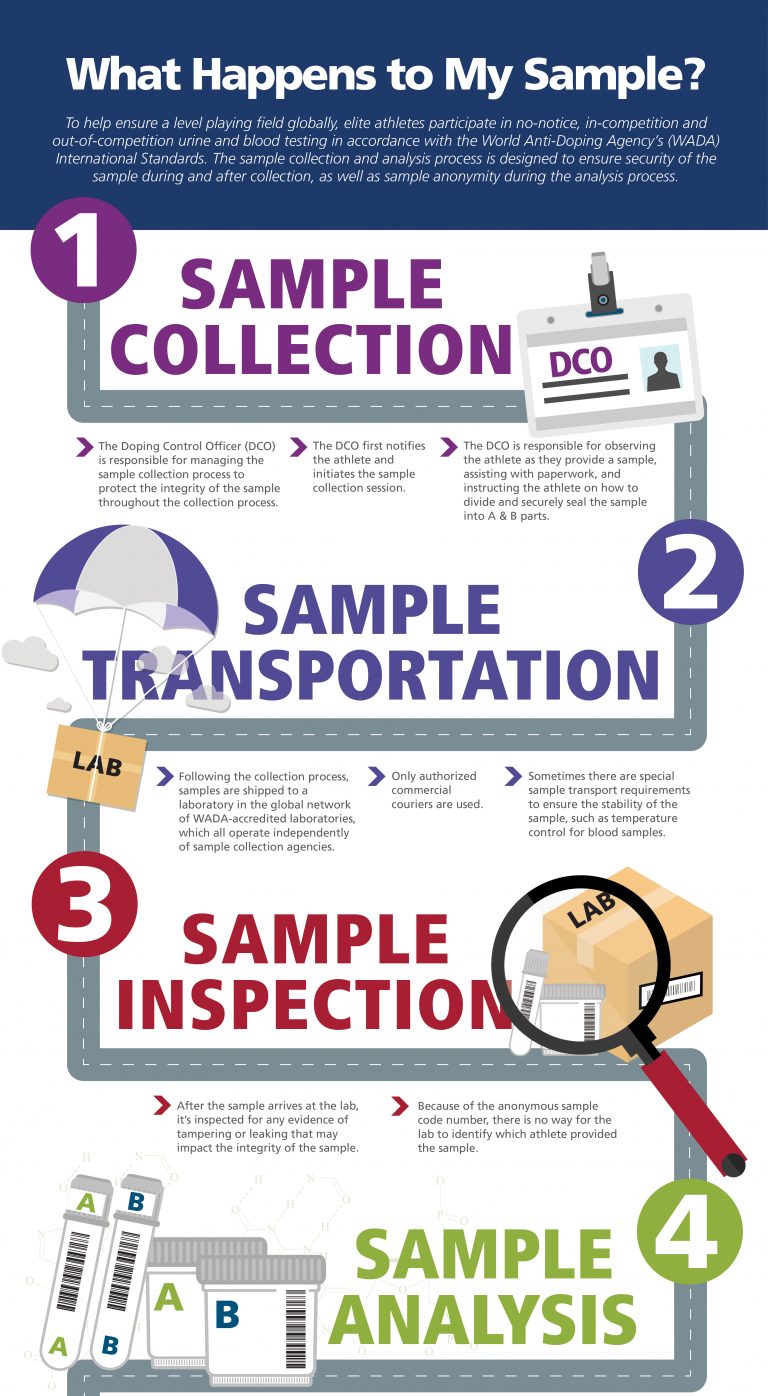
To help ensure a level playing field globally, elite athletes participate in no-notice, in-competition and out-of-competition urine and blood testing in accordance with the World Anti-Doping Agency’s (WADA) International Standards. The sample collection and analysis process is designed to ensure security of the sample during and after collection, as well as sample anonymity during the analysis process.
STEP ONE: SAMPLE COLLECTION.
The Doping Control Officer (DCO) is responsible for managing the sample collection process to protect the integrity of the sample throughout the collection process. The DCO first notifies the athlete and initiates the sample collection process. The DCO is responsible for observing the athlete as they provide a sample, assisting with paperwork, and instructing the athlete on how to divide and securely seal the sample into A and B parts.
STEP TWO: SAMPLE TRANSPORTATION.
Following the collection process, samples are shipped to a laboratory in the global network of WADA-accredited laboratories, which all operate independently of sample collection agencies. Only authorized commercial couriers are used. Sometimes there are special sample transport requirements to ensure the stability of the sample, such as temperature control for blood samples.
STEP THREE: SAMPLE INSPECTION.
After the sample arrives at the lab, it’s inspected for any evidence of tampering or leaking that may impact the integrity of the sample. Because of the anonymous sample code number, there is no way for the lab to identify which athlete provided the sample.
STEP FOUR: SAMPLE ANALYSIS.
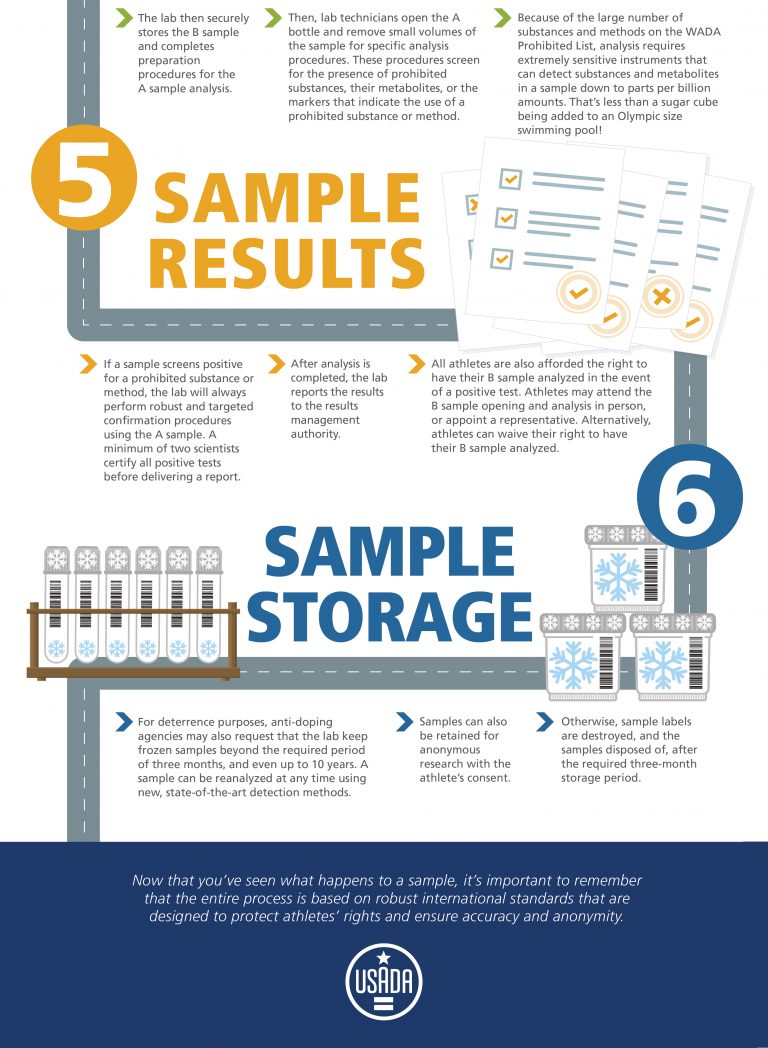
The lab then securely stores the B sample and completes preparation procedures for the A sample analysis. Then, lab technicians open the A bottle and remove small volumes of the sample for specific analysis procedures. These procedures screen for the presence of prohibited substances, their metabolites, or the markers that indicate the use of a prohibited substance or method. Because of the large number of substances and methods on the WADA Prohibited List, analysis requires extremely sensitive instruments that can detect substances and metabolites in a sample down to the parts per billion amounts. That’s less than a sugar cube being added to an Olympic size swimming pool!
STEP FIVE: SAMPLE RESULTS.
If a sample screens positive for a prohibited substance or method, the lab will always perform robust and targeted confirmation procedures using the A sample. A minimum of two scientists certify all positive tests before delivering a report. After analysis is completed, the lab reports the results to the results management authority. All athletes are also afforded the right to have their B sample analyzed in the event of a positive test. Athletes may attend the B sample opening and analysis in person, or appoint a representative. Alternatively, athletes can waive their right to have their B sample analyzed.
STEP SIX: SAMPLE STORAGE.
For deterrence purposes, anti-doping agencies may also request that the lab keep frozen samples beyond the required period of three months, and even up to 10 years. A sample can be reanalyzed at any time using new, state-of-the-art detection methods. Samples can also be retained for anonymous research with the athlete’s consent. Otherwise, sample labels are destroyed, and the samples disposed of, after the required three-month storage period.
Now that you’ve seen what happens to a sample, it’s important to remember that the entire process is based on robust international standards that are designed to protect athletes’ rights and ensure accuracy and anonymity.
This is an necessary category.