
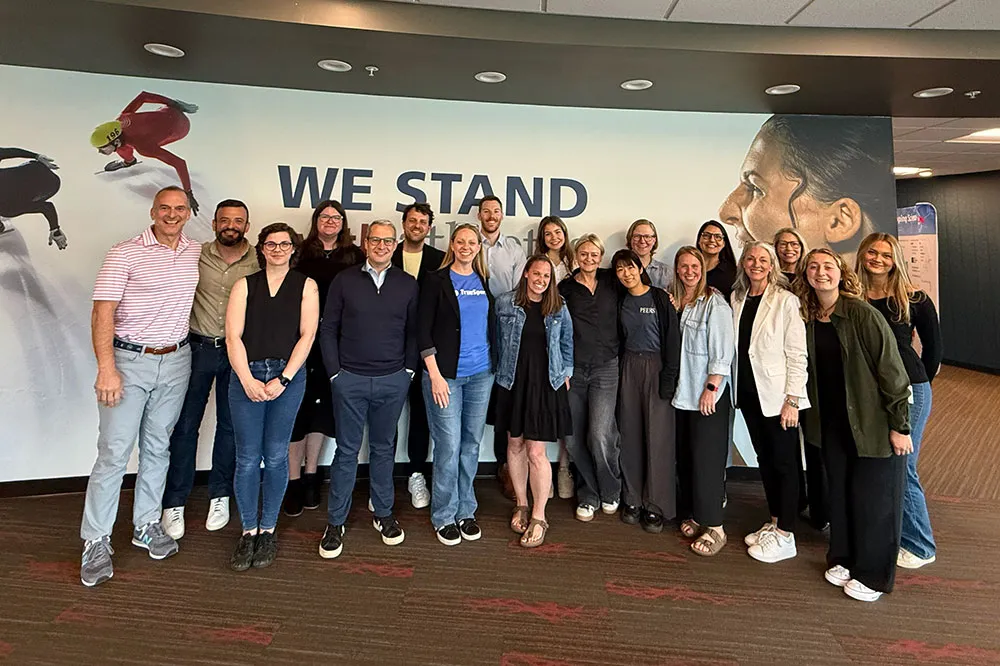
The U.S. Anti-Doping Agency (USADA) recently hosted the annual Penrose Education Experts and Resource Sharing (PEERS) Group Summit, bringing together anti-doping educators and leaders from around the world to transparently identify shared challenges and solutions, as well as advance resource sharing and innovate strategies that strengthen global clean sport education.
Now in its tenth year, the summit is one of the world’s most regionally diverse gatherings of international anti-doping educators, with this year’s summit uniting representatives from Australia, Denmark, Japan, Germany, Portugal, South America, the U.K., and the United States.
“This annual summit continues to create meaningful opportunities to share ideas, align on priorities, and advance education methods that better serve athletes,” said USADA Education Director Tammy Hanson. “By learning from one another and building on our collective experience, we can develop more effective, athlete-centered approaches that support clean sport around the world.”
This year’s summit focused on a range of topics shaped by the evolving needs of the global anti-doping education community, with sessions largely focused on the upcoming implementation of the 2027 International Standard for Education. Discussions covered the expansion of the Education Pool, new mandatory education topics, curriculum and education plan requirements, event-specific education, and educator standards and accreditation.
“Opportunities like the PEERS Group Summit are invaluable when it comes to advancing an impactful and evidence-based approach to anti-doping education, especially as we all work to navigate the 2027 World Anti-Doping Code changes,” said Kana Sato from the Japan Anti-Doping Agency. “In addition to learning from and collaborating with other anti-doping organizations, we believe that leveraging sport system analysis and drawing on existing sport science research—while also pursuing new research where needed—can help reduce duplication and ease the burden on athletes.”
Participants also explored monitoring, evaluation, and compliance strategies in a collaborative effort to ensure both organizational and global anti-doping education success. All discussions also considered how anti-doping organizations can better share resources and collaborate to reduce duplication and maximize efforts in a way that benefits clean athletes.
The summit examined youth and parent education models, with a focus on learning from one another’s approaches to better support and protect young athletes. In addition, attendees discussed neurodiversity considerations for athletes and received guidance from Danny Combs, MA, BCCS, CAS, a nationally recognized leader on supporting neurodivergent individuals, who helped the group explore practical strategies for designing more inclusive education for neurodiverse athletes.
“Participating in the PEERS Group has been an extremely valuable experience, providing a unique opportunity for learning, knowledge exchange, and strengthening the international network of anti-doping education professionals,” said Juliana Soares, who works with international Paralympic federations. “The presentations delivered by my colleagues were inspiring and offered practical insights that will undoubtedly support and enhance my work in the months ahead. In particular, the sessions on monitoring and evaluation, minors, and neurodivergent athletes highlighted critical topics that impact not only athletes within the Paralympic movement and Virtus, but athletes across all sports and federations, reinforcing the importance of anti-doping education that is both inclusive and evidence based.”
In addition to the in-person summit, the PEERS Group continues to connect throughout the year to support resource sharing and collaboration across the international anti-doping education community, with any outcomes made readily available to the whole anti-doping community. The group’s work aligns with the International Standard for Education’s mandate that World Anti-Doping Code signatories collaborate to minimize duplication of efforts and maximize the effectiveness of their education programs.