



Have you ever accepted a substance without knowing its prohibited status?
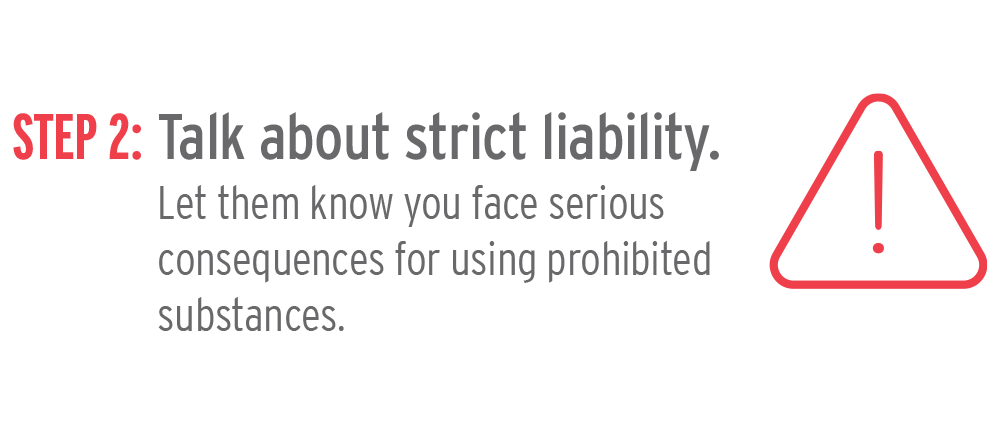
It’s easy to assume that someone you trust – a doctor, a coach, a spouse – is going to understand and help you uphold your anti-doping responsibilities. Unfortunately, the trusted people in an athlete’s life are not always going to know or respect the rules as expected. And more importantly, the athlete is ultimately responsible for what goes on and in their body, even if a trusted person gives an athlete a prohibited substance without their knowledge.
So, when you find yourself in situations like these, remember this: Did you check though?
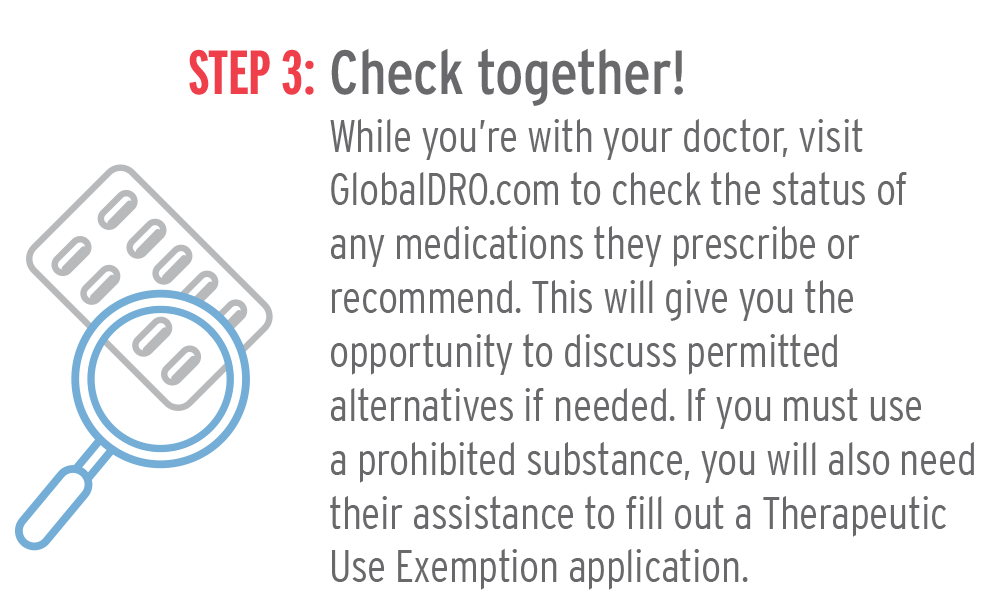
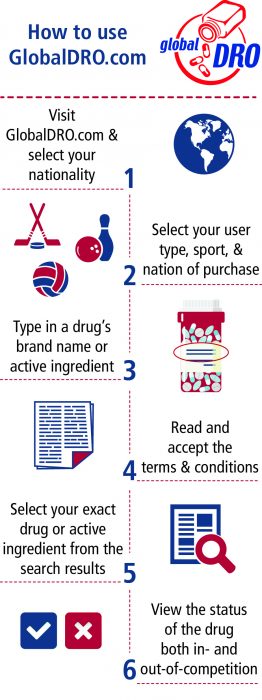
It only takes a few minutes to check medications and ingredients on GlobalDRO.com.
Why it matters: an athlete testimonial
Desmond Jackson thought he could trust his coach. They had been working together for years, developing a bond that felt more like family than professional mentorship. He was led to believe their values were the same.
At the 2021 U.S. Paralympic Track and Field Trials, the 22-year-old Jackson was accompanied by his coach as usual, and his thoughts were consumed by the anticipation of competing in an event where he could finally qualify for the postponed 2020 Paralympic Games in Tokyo. He was in a rush and already feeling the Minneapolis heat when his coach offered him a pill to help with his energy. Jackson took it, no questions asked. What happened that day would change the course of his athletic career and life.
Watch the video to learn more.
tools
The Global Drug Reference Online (Global DRO) provides athletes and support personnel with information about the prohibited status of specific medications based on the current World Anti-Doping Agency (WADA) Prohibited List.
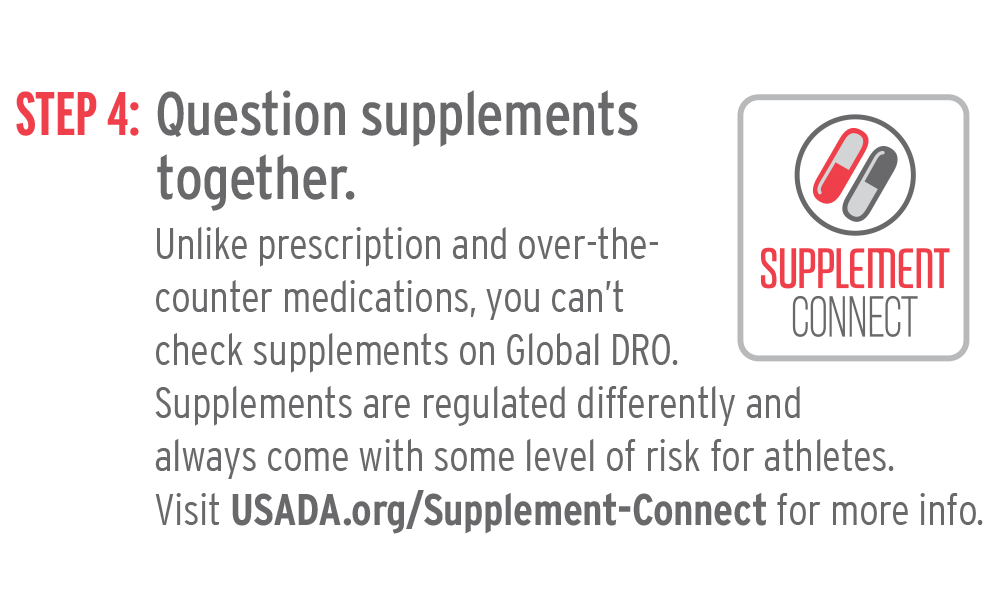
Unlike prescription and over-the-counter medications, you can’t check supplements on Global DRO. Supplements are regulated differently than medications and always come with some level of risk for athletes. Visit Supplement Connect for more info.
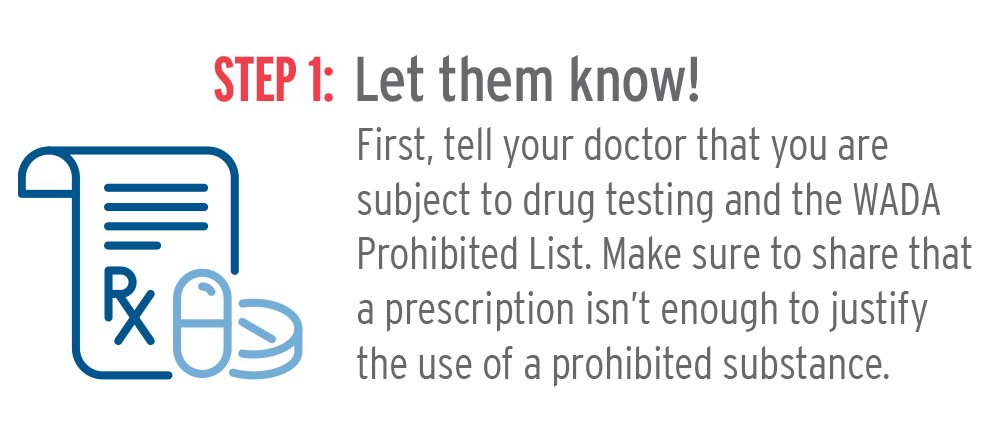
An athlete may apply for a Therapeutic Use Exemption (TUE) to use a prohibited medication or method for a specified time period. A prescription alone is not enough to justify a TUE, so athletes need to work with their physicians to provide the required documentation.
TIPS
related articles

Track and Field Athlete Raven Saunders Accepts Sanction for Second Anti-Doping Rule Violation
Raven Saunders, an athlete in the sport of track and field, has accepted a 30-month sanction for her second Whereabouts rule violation.

Track & Field Athlete Michael Hooker Accepts Sanction for Anti-Doping Rule Violation
Michael Hooker, an athlete in the sport of track and field, has accepted a three-year period of ineligibility for an anti-doping rule violation.

Court of Arbitration for Sport Extends Sanction Length for Para Cycling Athlete Aaron Keith
CAS rendered a decision in an appeal in the case of para cycling athlete Aaron Keith and determined via consent award that Keith should receive an extended sanction.

Independent Arbitrator Imposes Four-Year Sanction on Track & Field Athlete Shadrack Biwott for Anti-Doping Rule Violation
Shadrack Biwott, a track and field athlete, received an anti-doping rule violation from an independent arbitrator.
Karl Moore Accepts Sanction for Violation of PFL Anti-Doping Policy
Karl Moore has accepted the maximum one-year sanction for a violation of the Professional Fighters League Anti-Doping Policy.

Powerlifting Athlete Daniel Wade Accepts Sanction for Anti-Doping Rule Violation
Daniel Wade, an athlete in the sport of powerlifting, has accepted a two-year period of ineligibility after testing positive for a prohibited substance.
Return to the Clean Sport Campaign landing page