When it comes to fueling my body for the most elite swimming competitions, including the Olympic Games, I really like to understand everything I’m putting into my body, which means knowing the ingredients of foods and drinks. It also means staying hydrated!
Hydration is so important to performance that I can always see a difference in my training based on whether I’m properly hydrated or not. If I’m not very hydrated, I can feel sluggish in the water and that’s usually when my toes will cramp.
THE SCIENCE:A dehydrated athlete has a decreased volume of blood circulating through the body, and consequently: the amount of blood pumped with each heart beat decreases; exercising muscles do not receive enough oxygen; exhaustion sets in and the athlete’s performance suffers; by-profudcts of exercize are not flushed out of the body as regularly as they should be.
To stay hydrated, I mostly drink water throughout the day because it’s the simplest way to hydrate. I will also drink a cup of coffee a day and occasionally have plain sparkling water or an herbal tea without caffeine.
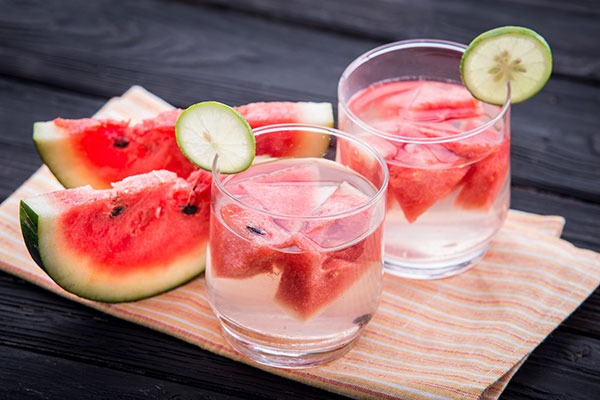
During meets or when I really feel depleted, I like to drink watermelon water because it has natural electrolytes from potassium. And I can understand the ingredients! I also like that there is only natural sugar versus the added sugar in sports drinks, but I do occasionally have sports drinks if they are the only option at meets. No matter what, all my decisions about what I ingest are based on being a drug-tested athlete because I would never want to jeopardize my career.
THE SCIENCE: When you have two to three hours between events, be sure to drink plenty of fluids, like water or a sports drink, for hydration, electrolyte replacement, and restoration of glycogen stores. Avoid drinks that contain caffeine, carbonation, and other stimulants.
As a swimmer, I also have to be particularly thoughtful about when I hydrate. While we might not realize it, swimmers are actually sweating throughout our swim practices. To stay hydrated during practice, I always make sure that I drink from my water bottle during breaks between sets. I use a sport-top bottle at practices so I can quickly get some water, and my goal is to try to finish my water bottle by the end of practice.
My hydration plan also varies between pool practices and dry land sessions because our interval pool sessions don’t allow as much time for drinking water. In the weight room, I’m on my own time, so I try to drink throughout my exercises. Basically, our swim practices are between 1.5-2 hours and my goal is to finish my 21-ounce water bottle. Our sessions in the weight room, on the other hand, are between 1-1.5 hours and I usually finish my 32-ounce water bottle and another partial bottle after a refill.
THE SCIENCE: Most individuals do not become thirsty until more than two percent of body weight is lost. Waiting until you are thirsty can affect your performance. When athletes only drink enough to quench their thirst, they may still be dehydrated. For best results, keep a bottle of fluid available when working out and drink as often as desired, ideally every 15-20 minutes.
My biggest tip for staying hydrated is getting water bottles that you love. It’s been a game-changer for me! I love my Hydro Flasks, so that’s what I typically use. I have a big 32-ounce Hydro Flask that I always carry around with me and I leave a 21-ounce Hydro Flask at the pool, so I never show up at a practice without having a water bottle. I’ve also gotten into the habit of filling up my water bottle before I leave the house, and I even started carrying around a backpack instead of a purse to have room to bring my water bottle. I also found that I’m much more likely to drink water if I have a straw-type lid on my bottle or a reusable straw in my glass.
What is food-first nutrition?
Every athlete wants to reach their peak performance, which often means pushing harder and longer in training and in competition. In the quest to reach their maximum potential, many athletes know that good nutrition is critical, but they may also look to the latest supplements and trendy diet regimens to give them that extra boost.
Some athletes, on the other hand, have found that a food-first approach is all they need to achieve peak performance. While some athletes may need to supplement their dietary intake because of a medical condition, many athletes can properly fuel their bodies and meet all their bodies’ needs with the right food.
In the Food-First Nutrition series, Olympians, Paralympians, and elite athletes share how they maintain the strength and energy they need to compete at the highest levels of sport through a food first approach. For more information on the best foods for athletes, check out the TrueSport Nutrition Guide.
About Melanie Margalis
An Olympian and University of Georgia graduate, Melanie Margalis won a gold medal in the 4x200m freestyle event from the 2016 Olympic Games in Rio. She also placed fourth in the 200m medley in Rio. In her career to date, Melanie has also been distinguished as a four-time medalist at the 2018 FINA World Championships and a member of the silver-medal winning 4x200m free relay at the 2019 FINA World Championships.
About USADA
USADA is committed to protecting clean athletes and promoting fair competition. As the official anti-doping agency for the United States, USADA provides education, testing, and resources that empower athletes to compete with integrity and confidence.



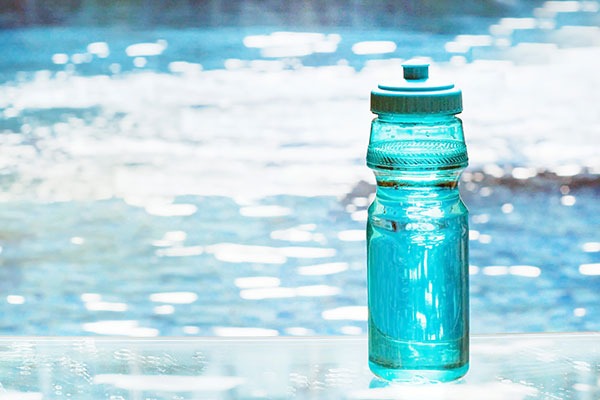 As a swimmer, I also have to be particularly thoughtful about when I hydrate. While we might not realize it, swimmers are actually sweating throughout our swim practices. To stay hydrated during practice, I always make sure that I drink from my water bottle during breaks between sets. I use a sport-top bottle at practices so I can quickly get some water, and my goal is to try to finish my water bottle by the end of practice.
 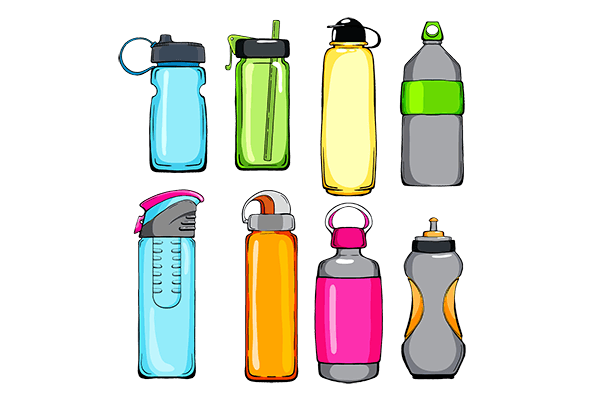 My biggest tip for staying hydrated is getting water bottles that you love. It’s been a game-changer for me! I love my Hydro Flasks, so that’s what I typically use. I have a big 32-ounce Hydro Flask that I always carry around with me and I leave a 21-ounce Hydro Flask at the pool, so I never show up at a practice without having a water bottle. I’ve also gotten into the habit of filling up my water bottle before I leave the house, and I even started carrying around a backpack instead of a purse to have room to bring my water bottle. I also found that I’m much more likely to drink water if I have a straw-type lid on my bottle or a reusable straw in my glass.
  An Olympian and University of Georgia graduate, Melanie Margalis won a gold medal in the 4x200m freestyle event from the 2016 Olympic Games in Rio. She also placed fourth in the 200m medley in Rio. In her career to date, Melanie has also been distinguished as a four-time medalist at the 2018 FINA World Championships and a member of the silver-medal winning 4x200m free relay at the 2019 FINA World Championships.