

DISCLAIMER: This content was published in 2019 and is NOT being updated.
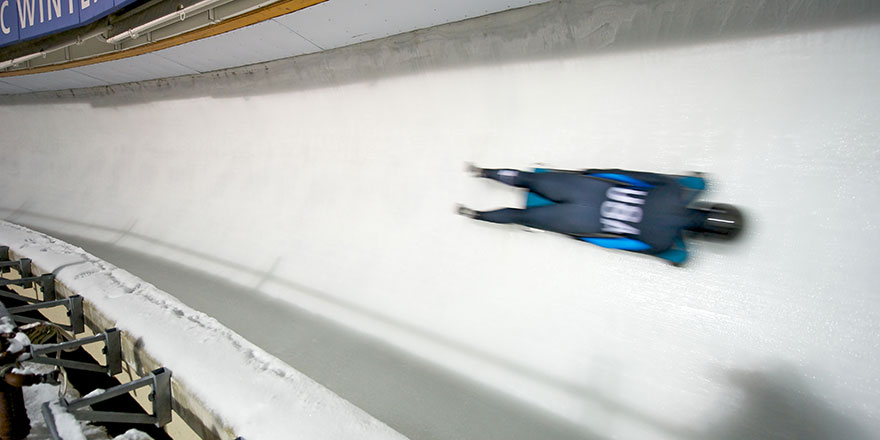
A five-time Olympian in the sport of skeleton with numerous top finishes in World Championships, Katie Uhlaender knows what it means to fight for her dreams. She also knows what it feels like to have those dreams clouded by questions of whether she has had access to a level playing field.
At the 2014 Games in Sochi, Uhlaender missed out on a bronze medal by just four-hundredths of a second to a competitor who was later implicated in Russia’s organized doping scheme. While that athlete was later cleared of doping charges, Uhlaender has spent years questioning her finishing place in Sochi and wondering if she lost out on a podium moment that she earned. Here, she reflects on that experience, how the Russian doping scandal has been handled, and the way forward for clean sport.
Video Transcript
The Olympics are about me pursuing my excellence for you to pursue your excellence, and under the rules that are created, we create solidarity. We optimize our contribution to that movement and inspire the world.
My initial reaction when I first heard of the Russian doping scandal was heartbreak, and the odd thing was, my first thoughts weren’t, “Oh man, I missed out on a medal.” My first thought was, “None of it was real.” The fact that the conspiracy to cheat was so in-depth, and that the athletes that participated in the conspiracy didn’t even know what was going on. What broke my heart is that the Olympic Games were not the Olympic Games, and I could never get that back. None of us could, even the winners of the race; it tainted the whole memory.
But without the rules, there’s nothing, and I appreciate that, you know, we all want Russia back in the game. But there’s no game if there are no rules, so it’s a slippery slope that we’ve started down with WADA to say, “Oh, it’s okay, we’ll adjust, we’ll keep adjusting.” Allowing them to continually push the rules back and back and back only awards and justifies that perspective. Which then polarizes the entire movement.
Athletes are becoming more aware and caring.
I think the challenge is having faith in the institutions and understanding that if they are able to voice their concerns, what’s going to happen? And that, you know, brings me back to the point of, you know, can we help determine what we consider fair, because that will give us agency, like then we’re invested in the process; we’re invested in the Games and not controlled by the Games.
My hope for the future of sport is not to tear down the current institutions, not for the athletes to have control, but for us to have a seat at the table.