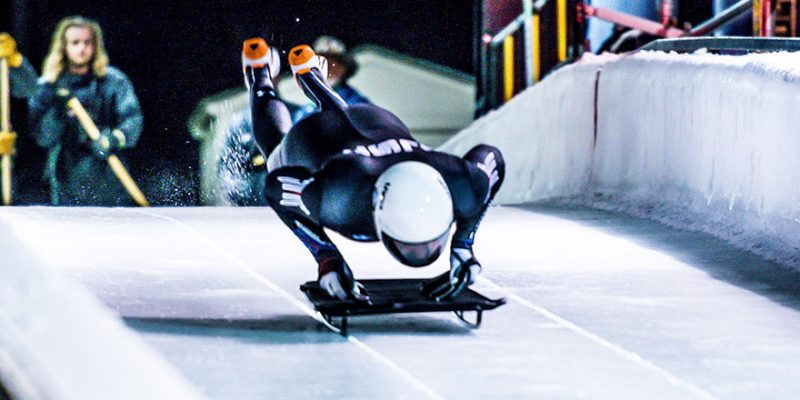
Q: How did you get into skeleton?
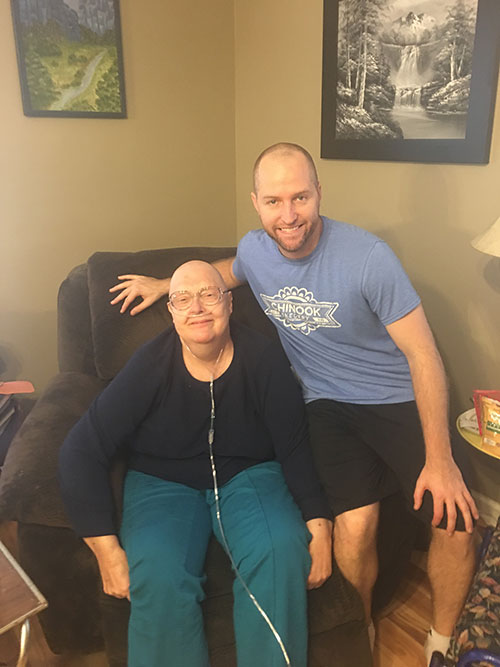
Stephen Garbett: I didn’t know about the sport skeleton until 2010. I’m from Parker, Colorado. I came back to visit my grandma because she was sick in the hospital, and during that trip, I got sick. I was put in the same hospital as my grandma and I was sitting in there for about three weeks. Doctors couldn’t figure out what was going on with me and my body just kept shutting down. During that time, I saw skeleton at the Olympics on TV. And at that point, I told myself if I get heathy, I want to do two things.
First, no one in my family ever graduated college. I wanted to be the first to do that. Second, I wanted to try skeleton. After I graduated from the University of South Carolina, I contacted the coaches.
Q: What was it about the sport that drew you in to it?
Stephen Garbett: It looked very exciting. When I was in the hospital, I didn’t know how much time I had, and it made me realize how precious life was. It made me realize you have to do the things you want to try in this world and set your goals high because we can achieve anything if we put our minds to it.
Once I got on the track, and I realized I liked it, I set my goals high. From there, I’ve been working my way up and hopefully you guys will be seeing me at the Olympics in 2022.
Q: Did you know about anti-doping before you started pursuing your Olympic dream?
Stephen Garbett: I knew a little bit about anti-doping, but not very much. I followed the typical major sports in the U.S. – baseball, football, basketball – and you heard of doping in those sports. That’s all that I really heard…it was very, very minuscule. Once I got involved with Team USA, I heard a lot more and I became very well educated on anti-doping and the processes that are involved in it as well.
Q: How long have you been subject to testing and what does that responsibility entail?
Stephen Garbett: I’ve been subject to testing for four years since I’ve been on the National Team. There’s a lot that goes into it that most people don’t know about. We have to fill out information about what our training schedule is and where we’re at all the time. That way we can be tested randomly, and no one can cheat the system because it’s going to be a random test.
Also, you have to know what you’re putting into your body. Anything that you’re putting into your body, putting on your skin, you need to know that kind of stuff.
Q: As you became more and more competitive in skeleton, did you ever worry about an injury?
Stephen Garbett: You don’t really think about injuries. At extreme sport – well any sports – injuries are going to happen. As an athlete, you try not to think about the injuries, but they do eventually happen, and it just depends on how you handle them and how severe they are, whether or not you’ll be able to make it back from those kind of injuries.
Q: In 2016, you became one of the athletes whose Olympic dream was threatened by injury. What happened?
Stephen Garbett: I actually was diagnosed with Compartment Syndrome in the calves. You can actually lose your legs from Compartment Syndrome. We knew that I had that, and we had planned on the end of the season having surgery for it.
During that season, I also rolled my ankle and we misdiagnosed it as a sprain. It was actually an avulsion fracture of my right malleoli. It ripped a chunk of bone off and that got in between where my ankle rotates and dug a hole in my cartilage. That caused a lot of damage down there, but we thought that it was just a sprain.
Once I had my Compartment Syndrome surgery, the doctors said, ‘Your ankle’s going to be fine after this because it has time to heal.’ I got out of that surgery and when I was able to start walking my ankle was locked up and they said, ‘Okay, we need to look at this.’ They realized something was really wrong. It was a huge setback. At that point I had to reanalyze and figure out, okay, what is the process going forward? What do I need to do to get back to sport? And just to be able to get back to walking.
It was a long process, but it was a very detailed process and it’s something that I’m glad I had my coaches and my team and our team doctor around me. I was able to go to him for the questions that I had because you have to be responsible for anything you’re putting in your body. That means even when you’re going into surgery, you need to follow the rules and guidelines for safe sport.
I was able to sit down with our team doctor, so he’s very familiar with all of the substances that we can and can’t have, and he actually guided me through the operations.
Q: When did you start thinking about the medications and procedures that you might need and if they might conflict with anti-doping responsibilities?
Stephen Garbett: Right when I realized that I needed surgery. One of my first questions to the doctor was how do I do this while complying with USADA and anti-doping rules?
He sat me down and we talked through the things that I could do, the things that I couldn’t do, what the options were for me being an athlete, so I knew going forward. Being able to talk to a doctor that was knowledgeable about anti-doping really made a big difference.
Q: Were there any specific substances or methods that you were concerned about?
Stephen Garbett: Not really. After I sat down and talked with my doctor, I knew that he was going to be keeping an eye on everything. Because I had him, I was not worried about it.
If I was to go to a different doctor, I would have had a lot more questions. I would have been a lot more worried about it and I would have probably had to do a lot more on my own to make sure I educated the doctor on the right processes. But because I had a doctor that was already educated in the area, it made it a lot easier for me.
Q: Did you tell your doctors and nurses that you were an elite athlete subject to anti-doping rules?
Stephen: Knowing that I was an athlete, I did speak to my doctors and nurses about anti-doping rules to make sure that I was safe and following all the right protocols.
I didn’t want a mistake. Even the nurses in there…I made sure I informed them because you need to make sure you know what’s going in your body, otherwise you’re the one responsible for it.
Q: Did you use any other tools to look into the status of your medications?
Stephen Garbett: Yeah, actually, I did. One tool that’s great for the athletes is Global DRO.
It’s a website that you can go in. You can enter the information and it tells you about the drugs, whether it is okay for athletes to use, whether it isn’t okay for athletes to use. Once I was prescribed the medications, even though I knew they were okay because my doctor confirmed it, I still went and double checked myself. I wanted to make sure that I really knew.
Q: Was there any pressure to use medications or supplements to speed recovery?
Stephen: No, there wasn’t any pressure. My doctors let me know what the options were available for me, and I didn’t even get told that there were other options that would make it faster.
I’m pretty sure if I went out to other doctors in the fields, they might have said, ‘Hey, this could speed it up, this could do this,’ but because I was going through one of our doctors, I didn’t get any of those kinds of options.
Q: Do you think anti-doping rules help make athletes’ health and well-being a top priority?
Stephen Garbett: Yes, I do. I believe that they are making sure that they’re looking out for the athletes and making sure that no corners are being cut. Obviously, as an athlete, you want to get back on the playing field as fast as possible, but you need to do it in a healthy manner, and the rules and guidelines set up make sure that the athletes are doing it in a healthy manner.
Q: Is there any advice you would give to athletes who are recovering from an injury when it comes to competing clean?
Stephen Garbett: Be patient and find a good supportive group because it’s very difficult to battle back to the top. But if you have a good support group, a good team behind you that will be there for you and help you, it makes it a lot easier.