


Fluids and Hydration
Hydration is one of the most important nutritional concerns for an athlete. Approximately 60 percent of body weight is water. As an athlete trains or competes, fluid is lost through the skin through sweat and through the lungs while breathing. If this fluid is not replaced at regular intervals during practice or competition, it can lead to dehydration. A dehydrated athlete has a decreased volume of blood circulating through the body, and consequently:
- The amount of blood pumped with each heart beat decreases
- Exercising muscles do not receive enough oxygen
- Exhaustion sets in and the athlete’s performance suffers
- By-products of exercise are not flushed out of the body as regularly as they should be
Research has shown that losing as little as 2% of total body weight can negatively affect athletic performance. For example, if a 150-pound athlete loses three pounds during a workout or competition, their ability to perform at peak performance due to dehydration is reduced. Proper fluid replenishment is the key to preventing dehydration and reducing the risk of heat injury in athletes engaged in training and competition.
Preventing Dehydration
The best way to prevent dehydration is to maintain body fluid levels by consuming plenty of fluids before, during, and after a workout or competition. Often, athletes do not realize that they are losing body fluids or that they are impacting their performance through dehydration. Athletes who are not sure how much fluid to drink can monitor hydration using two helpful techniques:
- Weighing themselves before and after practice. For every kilogram (pound) lost during the workout, drink ~1.5 liters (~three cups) of fluid in order to rehydrate the body.
- Checking urine color. Urine that is dark gold in color indicates dehydration. Urine similar in color to pale lemonade is a sign of a hydrated athlete.
Many times athletes wait to drink until they are thirsty. Thirst is not an accurate indicator of how much fluid an athlete has lost. Athletes who wait to replenish body fluids until feeling thirsty are already dehydrated. As a matter of fact, most individuals do not become thirsty until more than 2 percent of body weight is lost. Waiting until you are thirsty can affect your performance. When athletes only drink enough to quench their thirst, they may still be dehydrated.
For best results, keep a bottle of fluid available when working out and drink as often as desired, ideally every 15-20 minutes. Table 12 lists guidelines for fluid replacement from the National Athletic Trainers Association, the Academy of Nutrition and Dietetics, and the American College of Sports Medicine.
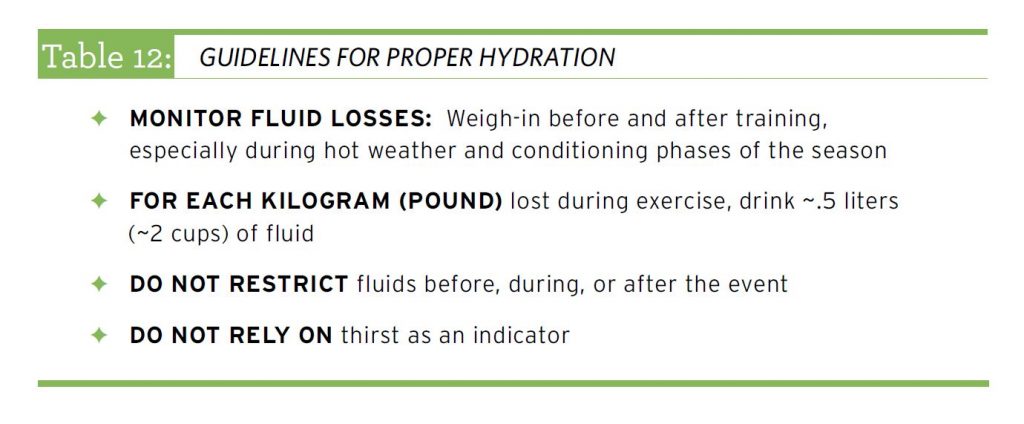
TABLE 12 IMAGE TEXT:
GUIDELINES FOR PROPER HYDRATION
- Monitor Fluid Losses: Weigh-in before and after training, especially during hot weather and conditioning phases of the season
- For Each Kilogram (Pound) lost during exercise, drink ~.5 liters (~2 cups) of fluid
- Do Not Restrict fluids before, during, or after the event
- Do Not Rely On thirst as an indicator
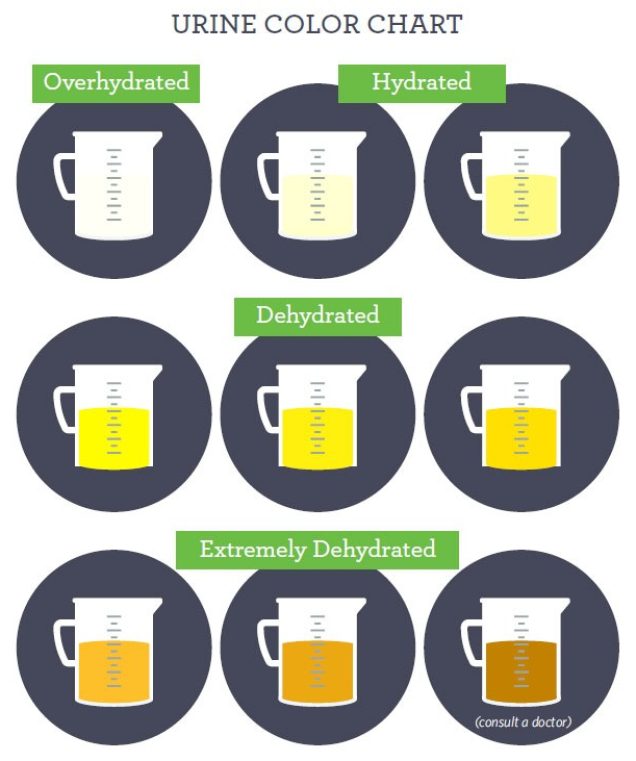
URINE COLOR CHART
- Overhydrated: Almost clear yellow
- Hydrated: Pale shades of yellow
- Dehydrated: Bright yellow to darker yellow
- Extremely Dehydrated: Orange to brown (if brown, consult a doctor)
What about Fluid Replacement Drinks?
Sports drinks containing between 6-8% carbohydrates can provide energy to the working muscle that water cannot, which increases exercise capacity and improves performance. It appears that athletes who consume a sports drink can maintain blood glucose levels at a time when muscle glycogen stores are diminished. This allows carbohydrate utilization and energy production to continue at high rates. Research has also shown that mouth rinses with carbohydrates can improve performance at rates similar to ingestion. Beverages containing more than one kind of sugar (i.e. glucose and fructose) can increase carbohydrate absorption rates because each sugar is absorbed via different channels.
How Important are the Electrolytes Provided by Fluid Replacement Drinks?
The ingestion of sodium during exercise may help with maintenance or restoration of plasma volume during exercise and recovery. The consumption of sports drinks containing sodium helps retain water in the body and aids in hydration by increasing the absorption of fluid from the intestines into the muscles. Recent research has suggested that a 6-8 percent carbohydrate sport drink with at least 110 mg of sodium per 8 ounce serving empties from the stomach just as fast as plain water. Endurance activities lasting longer than three hours may require as much as 175 mg of sodium per 8 ounce serving. There has been concern by parents, coaches, and athletes that sports drinks may contain too much sodium. However, many fluid replacement drinks are low in sodium. An 8 ounce serving of a fluid replacement drink can have a sodium content similar to that of a cup of reduced fat milk. Most Americans consume too much sodium through processed and convenience foods, not through fluid replacement drinks.
What is an ideal fluid replacement drink?
The ideal fluid replacement beverage is one that tastes good, does not cause GI discomfort or distress when consumed in large volumes, promotes rapid fluid absorption and maintenance of body fluid, and provides energy to working muscles during intense training and competition.
Guidelines for Fluid Replacement
The following guidelines for maintaining body fluid balance, improving performance in the heat, and preventing heat-related illness appear to be prudent based on current scientific knowledge.
- For intense training and long workouts, a fluid replacement drink containing carbohydrates may provide an important source of energy. A 6-8 percent carbohydrate beverage is typically most effective in maintaining fluid balance while supplying the muscles with fuel.
- The fluid consumed during activity should contain a small amount of sodium and electrolytes. The sodium may be beneficial for quicker absorption and replacement of sweat loss.
- The beverage should be palatable and taste good.
- The athlete should drink 7-12 ounces of cold fluid about 15-30 minutes before workouts. If the workout is prolonged, add carbohydrates to the beverage at a 6-8 percent concentration.
- Drink 4-8 ounces of cold fluid during exercise at 15-20 minute intervals.
- Start drinking early in the workout because thirst does not develop until 2 percent of body weight has been lost, by which time performance may have begun to decline.
- Avoid carbonated drinks, which can cause GI distress and may decrease the volume of fluid consumed.
- Avoid beverages containing caffeine, alcohol, and those promoted as energy drinks.
- If you have never had a sports drink, don’t drink one for the first time on competition day. Practice consuming fluids while you train. Use a trial and error approach until you discover the fluids that work well for you and encourage hydration.
Read the full Nutrition Guide and learn more about how to get peak performance with optimal nutrition.